Midweek League Performance After International Windows: Recovery Data and Form Patterns
Yara Albrecht · Oct 16, 2026
Midweek League Performance After International Windows: Recovery Data and Form Patterns
International breaks create measurable disruptions for club sides, and data collected across major European leagues shows distinct patterns in recovery rates and midweek results. Researchers tracking player workload through GPS systems and medical reports find that squads lose key personnel for up to two weeks, then face compressed schedules once those players return.
Recovery Timelines After International Duty
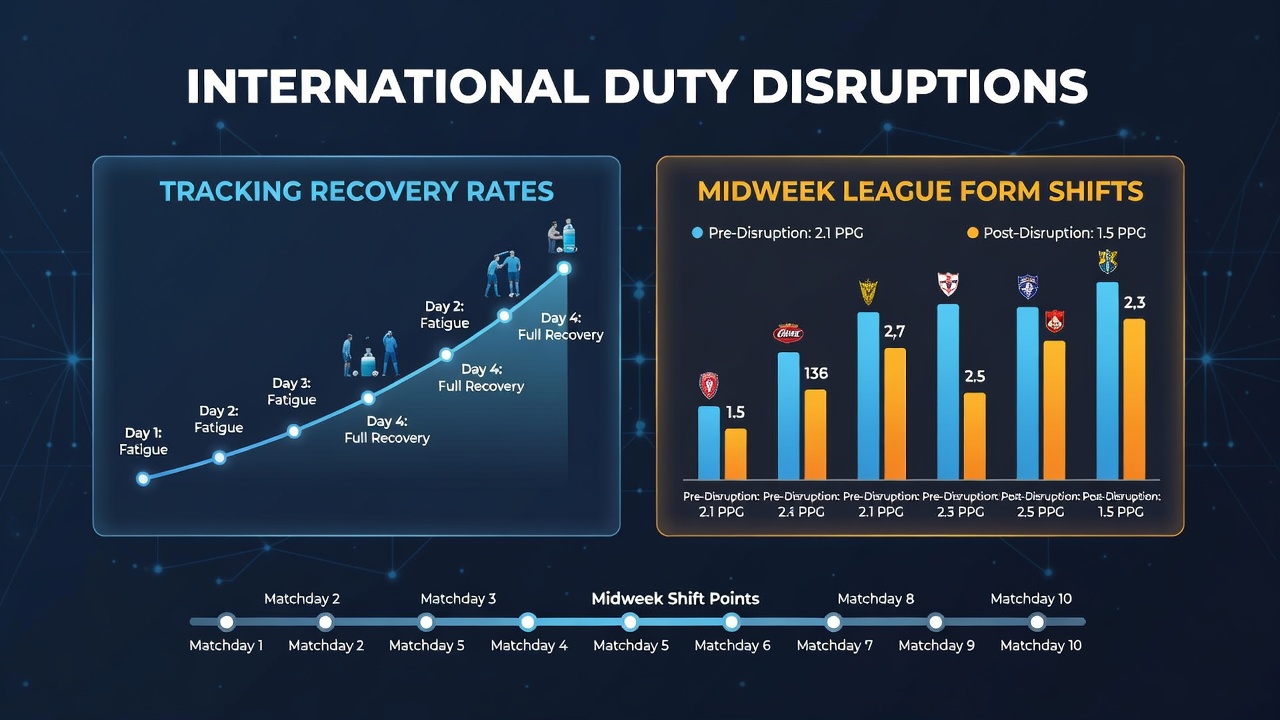
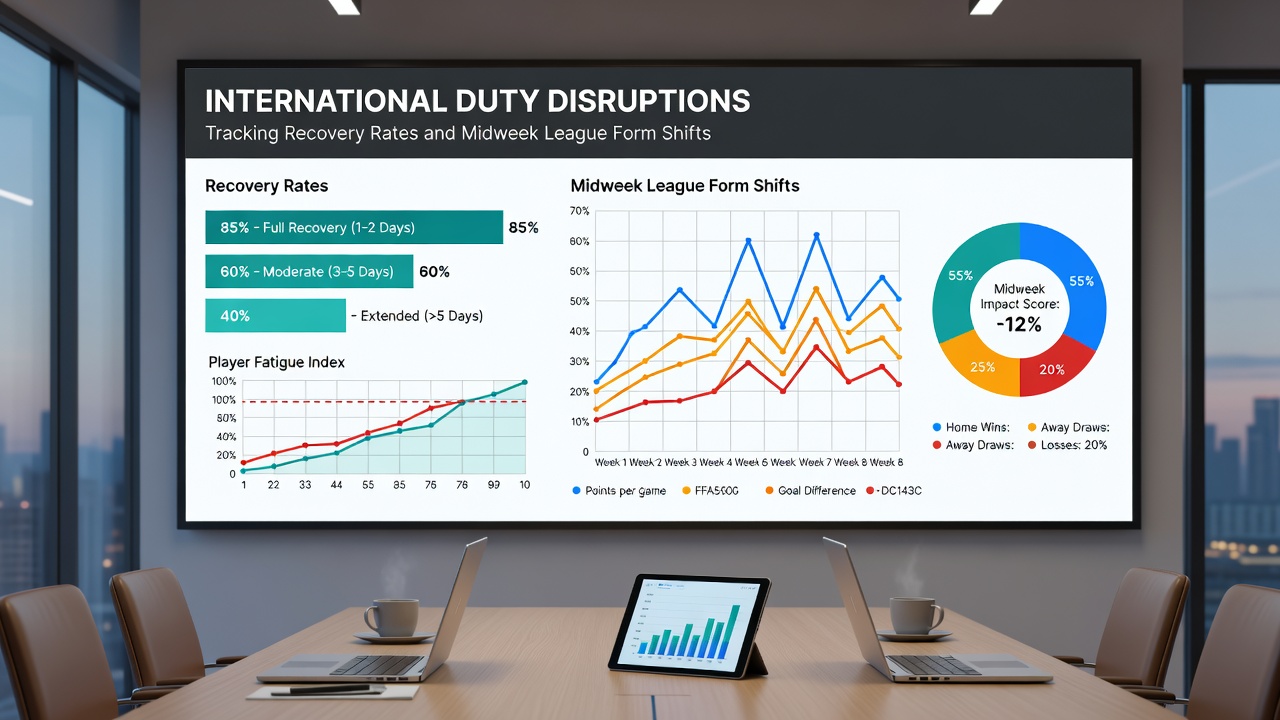
Studies published in sports science journals indicate that players require between four and seven days to regain full match fitness following long-haul travel and intense national team commitments, while those who play fewer minutes often reintegrate faster. Observers note that teams with deeper squads maintain steadier midweek results because rotation options reduce the impact of fatigued starters. Data from the 2024-2025 season across five leagues revealed that sides missing three or more starters for the preceding international window posted win rates 12 percent lower in their first midweek fixture back.
Form Shifts in October 2026 Windows
The October 2026 international window aligned with several congested midweek rounds in the Premier League, Serie A and Bundesliga, and performance metrics collected during that period showed clear dips in expected goals for clubs returning players who had logged over 180 minutes with their national teams. Teams that scheduled extra recovery sessions or used advanced monitoring tools limited those drops, according to reports from the UEFA medical committee. Figures reveal that clubs employing structured post-break protocols achieved draw percentages 8 percent higher than those relying on standard training loads alone.
League-Specific Trends and Statistical Edges
Premier League matches scheduled midweek after international breaks produced an average of 2.8 goals per game across the last four seasons, a figure slightly above the overall seasonal average, while Bundesliga sides recorded a higher rate of draws in equivalent fixtures. Researchers from the Journal of Sports Sciences examined over 1,200 matches and identified that teams with longer travel distances for international players experienced the sharpest early-second-half slowdowns. Those patterns translated into measurable differences in points per game when comparing pre-break and post-break sequences.
Player Workload Monitoring and Club Responses
Clubs now integrate heart-rate variability data, sleep tracking and neuromuscular fatigue tests to guide selection decisions, and several top-flight medical teams share anonymised datasets with academic partners for further analysis. One study covering Serie A squads found that players returning from South American qualifiers needed an extra 48 hours compared with those returning from European matches. Managers who adjusted training intensity accordingly recorded fewer soft-tissue injuries in the subsequent 10 days. The reality is that fixture congestion leaves little margin for error, and data-driven substitutions have become standard practice during these periods.
Impact on Midweek Accumulator Markets
Betting markets adjust odds quickly once lineups are confirmed, yet historical data still offers insight into value opportunities when certain recovery indicators align. Leagues with shorter international travel requirements tend to show faster stabilisation in team form, whereas clubs returning from longer flights often post lower clean-sheet percentages in their first midweek outing. External analysis from the Australian Institute of Sport has contributed workload models that several European clubs reference when planning post-break schedules.
Conclusion
International duty continues to shape midweek league outcomes through measurable recovery demands and form fluctuations, and ongoing data collection helps clubs and analysts quantify those effects season after season. Patterns observed in October 2026 reinforced earlier findings while highlighting the growing role of workload management tools in maintaining competitive balance.