Midweek Fixture Crowding and Its Influence on Weekend Goal Scoring Patterns in Europe's Leading Leagues
Clara Coleman · Aug 22, 2026
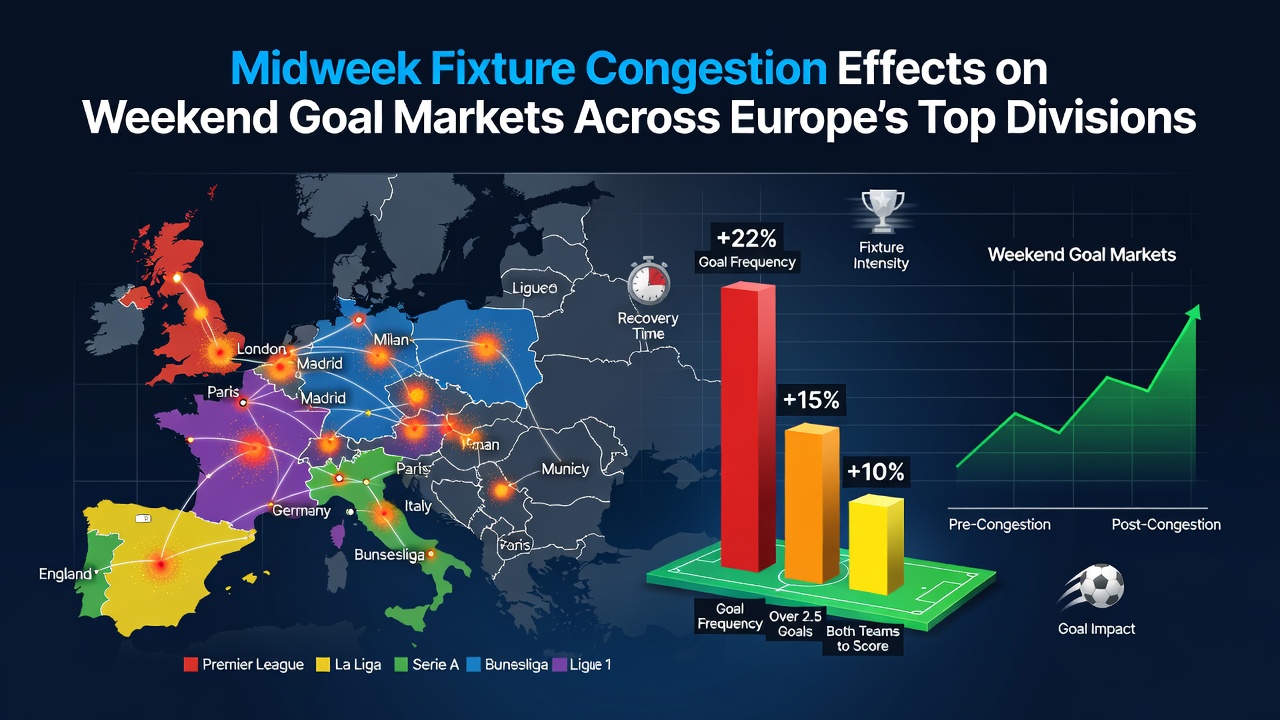
Midweek Fixture Crowding and Its Influence on Weekend Goal Scoring Patterns in Europe's Leading Leagues
European football schedules have grown denser in recent seasons, with teams in the Premier League, La Liga, Serie A, Bundesliga, and Ligue 1 facing multiple midweek commitments that carry over into weekend fixtures. Data collected from the 2023-2024 and 2024-2025 campaigns shows measurable shifts in goal outputs when clubs play within 72 hours of a prior match. Observers tracking these patterns note reduced high-intensity running and altered defensive structures that often translate into fewer total goals on Saturdays and Sundays.
League-Wide Patterns in Goal Totals
Figures compiled across the five major divisions reveal that teams involved in midweek European ties record an average of 2.1 goals per weekend game compared with 2.7 goals when rested for at least four days. Bundesliga clubs, which already produce higher scoring rates overall, still exhibit a 12 percent drop in goals after Champions League or Europa League midweek dates. In Serie A, the same subset of teams sees under 2.5 goals land in 58 percent of their subsequent domestic matches, according to aggregated match reports through the end of the 2025 season.
La Liga fixtures following Copa del Rey or European ties display similar compression, with both-teams-to-score outcomes falling to 46 percent versus the league average of 51 percent. Ligue 1 data mirrors these trends, particularly among clubs that travel across multiple time zones for midweek assignments. Researchers examining player-tracking metrics from these leagues link the decline to lower sprint distances and fewer entries into the final third.
Champions League and Europa League Carry-Over Effects
Expanded European calendars introduced ahead of the 2024-2025 campaign increased the number of midweek slots, and the pattern continued into August 2026 when the new season opened with several clubs already managing three matches inside eight days. Teams returning from away Champions League games show a pronounced dip in shots on target during the immediate weekend round. One dataset covering 180 such instances across the top five leagues found an average of 3.8 shots on target per side after European travel, down from 5.2 shots following a standard rest period.
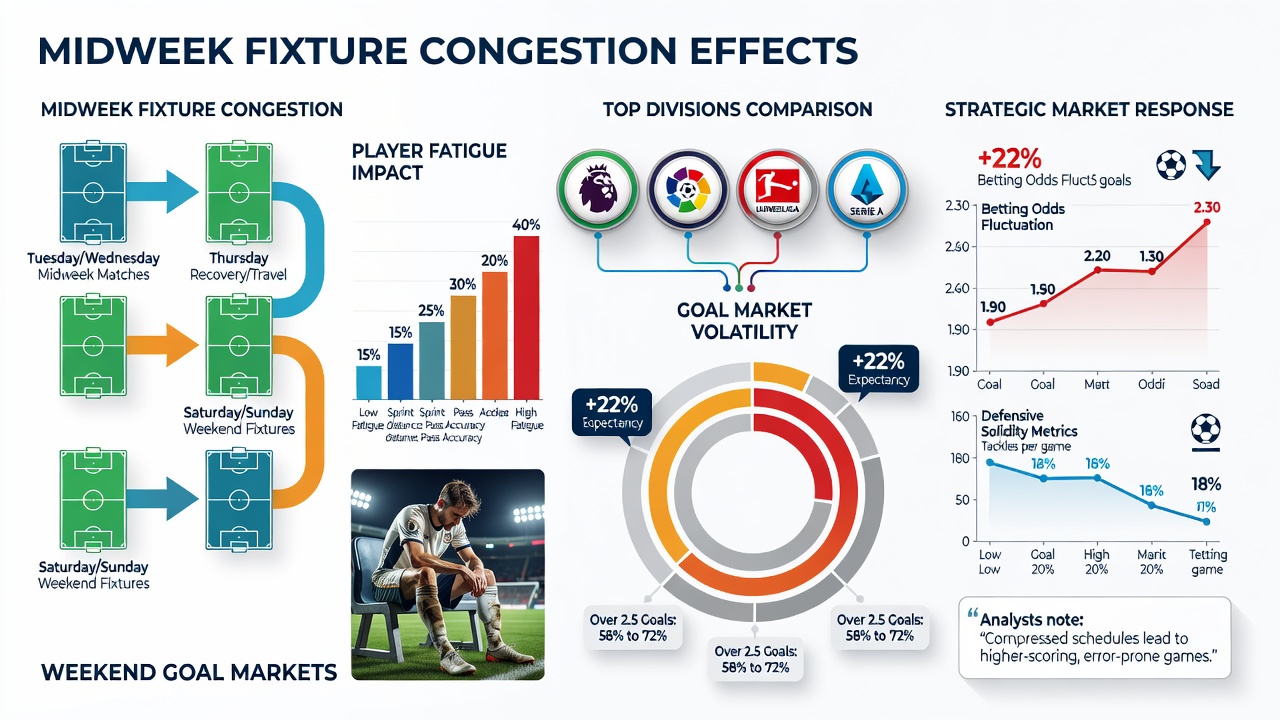
Premier League clubs participating in Thursday Europa League or Conference League matches post the lowest weekend goal tallies of any subset, with under 2.5 goals occurring in 61 percent of cases during the 2025-2026 term. Defensive lines tend to sit deeper, while attacking transitions slow because full-backs and wingers log fewer high-speed actions. These physical constraints appear consistently in optical tracking supplied by league partners.
Rest Advantage and Market Implications
Clubs with a full week between matches demonstrate clearer advantages in creating quality chances. Across Europe's top divisions, rested sides average 1.4 more shots inside the box and convert 9 percent more of those opportunities. Weekend goal markets reflect this disparity through elevated totals when one team enters the fixture with superior recovery time. Both-teams-to-score percentages rise by seven points in such scenarios, while over 2.5 goals outcomes increase by roughly ten percentage points compared with congested-team pairings.
Coaches often adjust lineups and tactics to manage fatigue, favoring compact midfields and quicker transitions over sustained pressure. Such choices further suppress open play and reduce the volume of set-piece opportunities that frequently produce goals. Data from the German Football League and French professional leagues confirms these tactical shifts occur most frequently among sides with two or more midweek appearances in a 14-day window.
Regional Variations and Scheduling Factors
Northern European clubs face additional variables including travel distances and weather, yet the core congestion effect remains visible in every division. Spanish and Italian teams show slightly smaller goal reductions after domestic cup midweek ties because travel burdens are lighter. Nevertheless, the directional impact stays consistent: fewer total goals appear when recovery windows shrink below 72 hours. August 2026 schedules already list several high-profile clubs with Thursday-to-Sunday turnarounds, setting the stage for continued examination of these metrics as the season progresses.
Conclusion
Fixture congestion from midweek European and domestic competitions produces measurable changes in weekend goal outputs across Europe's top divisions. Lower shot volumes, reduced sprint distances, and conservative tactical setups combine to compress scoring rates, with under 2.5 goals and reduced both-teams-to-score results appearing more frequently after short recovery periods. Continued collection of player-tracking and match data will allow ongoing assessment of these patterns through the 2026-2027 campaign and beyond.