Fixture Overload Impacts on Team Rosters and Transfer Market Dynamics in European Football
Yara Albrecht · Sep 18, 2026
Fixture Overload Impacts on Team Rosters and Transfer Market Dynamics in European Football
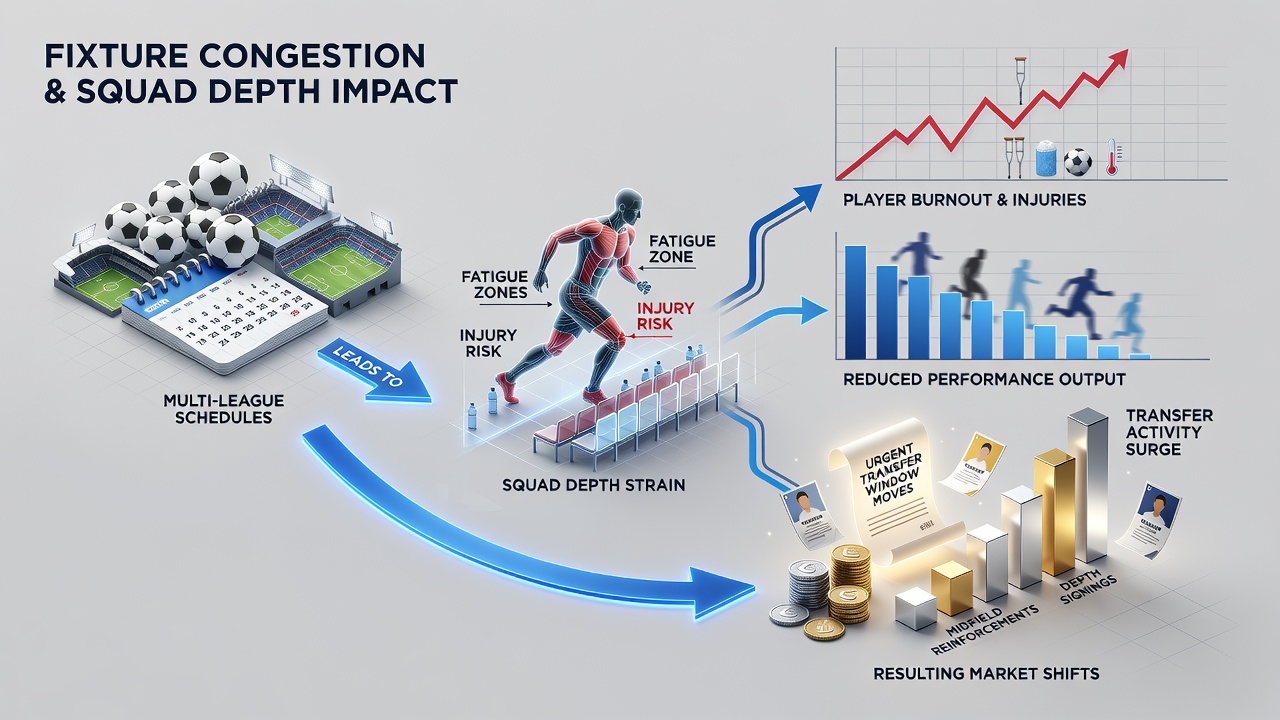
European football clubs competing across domestic leagues, domestic cups and continental tournaments now navigate fixture lists that stretch squad resources to their limits, and data from the 2025-26 campaign shows how this pressure shapes both on-pitch rotations and transfer activity. Researchers tracking match loads report that teams in the Premier League, La Liga, Serie A, Bundesliga and Ligue 1 average between 55 and 70 fixtures per season when all competitions are included, with the busiest sides often exceeding 75 matches when deep cup runs occur. Such volume forces managers to rotate personnel more frequently, yet the physical toll remains evident in elevated injury rates among midfielders and full-backs who log the highest minutes.
Measuring the Load Across Multiple Competitions
UEFA's technical reports document that Champions League and Europa League participants face the steepest fixture density between September and December, when league fixtures overlap with midweek European ties, and clubs in September 2026 will encounter similar clustering once the new format settles into its second year. Observers note that teams with thinner squads suffer most, because limited depth leaves little margin for recovery between games played in different time zones or on varied pitch surfaces. Studies from sports science departments at universities in Germany and Italy have quantified how consecutive matches with less than four days' rest correlate with a measurable rise in soft-tissue injuries, prompting clubs to adjust training regimens and medical monitoring.
Squad Depth Strategies Under Pressure
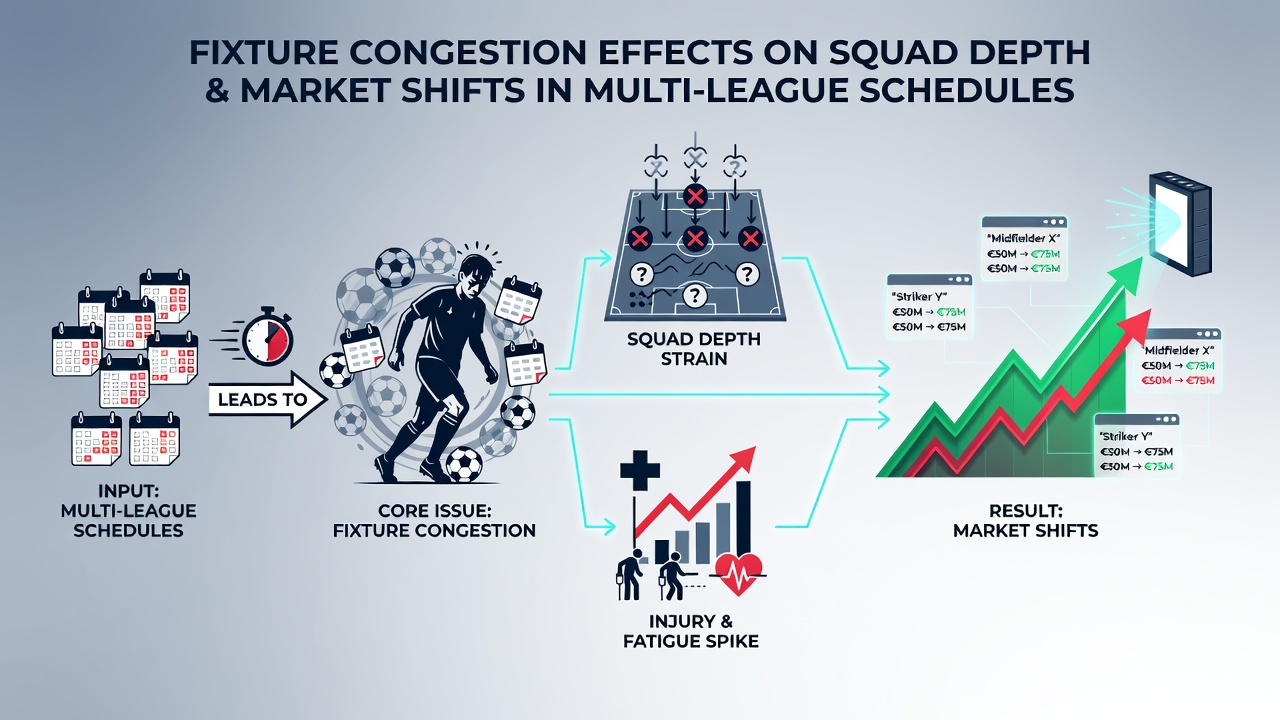
Coaches respond by expanding training groups and integrating academy graduates earlier than in less congested seasons, while data from the 2025-26 winter window reveals a clear uptick in short-term loan deals for players who can provide immediate cover. Clubs with greater financial resources maintain larger first-team squads, yet even these sides encounter challenges when key personnel accumulate bookings or minor knocks that accumulate across multiple competitions. Those who studied the 2024-25 and 2025-26 seasons together found that sides reaching the latter stages of both domestic and European cups rotated an average of 3.2 more players per match than teams eliminated early, illustrating how fixture survival directly influences selection patterns.
Transfer Market Adjustments and Positional Demand
Market shifts become visible when clubs identify gaps exposed by the schedule, and recruitment departments now prioritise versatile athletes capable of covering multiple positions to maximise squad utility. Midfielders and wide defenders have seen their average transfer fees rise in recent windows because these roles experience the highest cumulative workload, according to figures compiled by European football observatories. January activity often focuses on experienced players who require minimal adaptation time, whereas summer windows allow longer-term investments in younger profiles expected to grow into the rotation demands of the following season. One analysis of Premier League and Serie A transfers between 2023 and 2026 showed a 14 percent increase in deals involving players with prior experience in at least two major European leagues, reflecting the premium placed on proven adaptability.
Regional Variations and Financial Implications
Clubs in leagues with earlier winter breaks, such as the Bundesliga, gain a brief recovery window that teams in England or Spain lack, and this structural difference influences both injury profiles and subsequent transfer priorities. Financial fair play regulations further constrain the ability of some sides to expand squads indefinitely, pushing directors toward creative solutions such as performance-related clauses or sell-on percentages to manage risk. Data released by the European Club Association indicates that mid-table clubs in particular have increased their use of multi-club ownership networks to facilitate temporary player movements without permanent outlay, thereby preserving depth during congested periods without breaching spending limits.
Longer-Term Planning and Emerging Patterns
Looking ahead to the 2026-27 campaign, fixture calendars already published show continued overlap between league restarts and the group phase of European competitions, so clubs are preparing squad lists with greater emphasis on medical and performance staff who specialise in load management. Those who examined historical data alongside current trends observe that teams maintaining at least 22 players with first-team experience tend to suffer fewer fixture-related setbacks, prompting boards to allocate larger portions of transfer budgets toward depth rather than headline signings. Such strategic shifts appear across multiple leagues and suggest that fixture congestion will remain a central driver of both squad construction and market behaviour in the seasons ahead.
Conclusion
Fixture congestion continues to test the limits of squad depth while simultaneously reshaping transfer priorities across Europe's top leagues, with clubs adapting through targeted recruitment, improved medical protocols and structural planning that accounts for multi-competition calendars. The patterns observed through 2026 indicate these pressures will persist, influencing how teams balance immediate results against long-term squad sustainability.