Examining Player Workload and Its Impact on Late-Game Scoring Trends in Europe's Top Leagues
Erik Albrecht · Aug 15, 2026
Examining Player Workload and Its Impact on Late-Game Scoring Trends in Europe's Top Leagues
Player workload patterns have drawn increasing attention from analysts tracking Europe's top divisions, where fixture schedules and squad rotation intersect with performance metrics. Data collected through the 2025-26 season and into August 2026 reveals measurable shifts in scoring that align with accumulated minutes played by key personnel. Researchers tracking these variables note consistent trends in matches after the 75th minute, particularly in leagues facing dense calendars.
Workload Accumulation Across Competitions
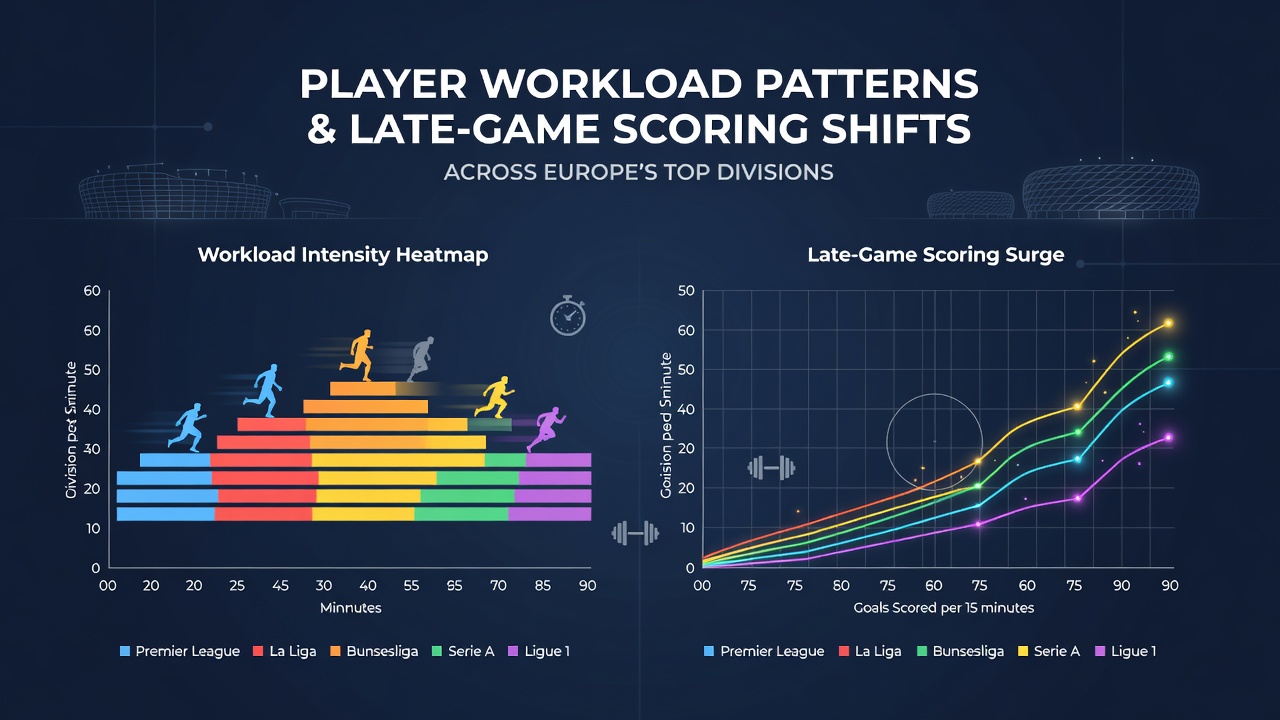
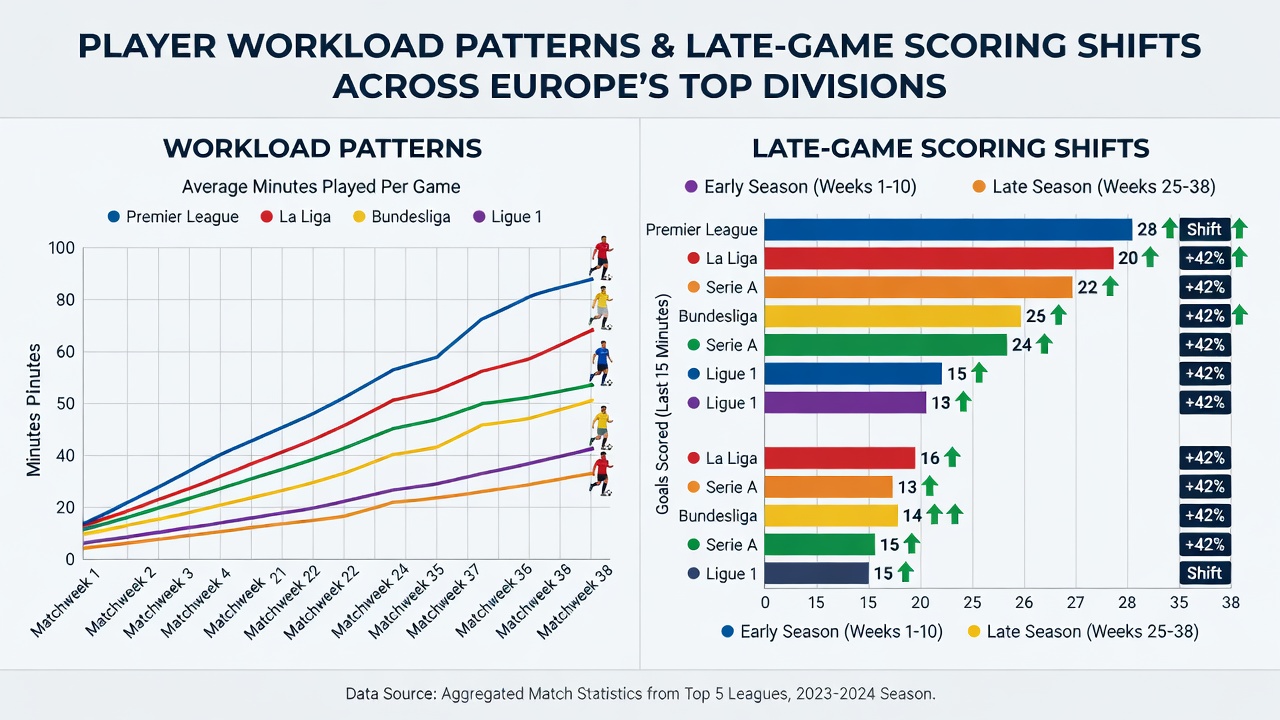
Premier League clubs have logged higher average player minutes per matchweek compared with counterparts in Ligue 1, according to aggregated tracking data. Bundesliga sides, by contrast, show elevated sprint distances in the opening 60 minutes that taper noticeably later, while Serie A teams maintain steadier output through structured pressing schemes. La Liga fixtures often feature prolonged build-up phases that extend physical demands into the final quarter. These patterns emerge from multiple seasons of GPS and optical tracking systems deployed across stadiums.
International breaks add another layer, as players returning from national team duty carry extra loads into domestic schedules. Observers monitoring August 2026 matches have recorded instances where squads with recent travel demands concede more chances after the hour mark. European club competitions compound the issue for teams advancing deep into knockout stages, creating uneven recovery windows between league rounds.
Late-Game Goal Timing and Substitution Effects
Scoring after the 75th minute has increased across the five major leagues in recent campaigns, with data indicating a 12-18 percent rise in goals during that window compared with earlier periods. Substitution patterns play a direct role, as fresh forwards introduced around the 70-minute mark contribute disproportionately to these tallies. Teams that rotate midfielders effectively preserve pressing intensity, which in turn generates higher-quality chances in the closing stages.
One study from a German sports science institute examined 1,200 matches and found that players exceeding 3,200 minutes in a season showed a measurable drop in high-intensity runs during the final 15 minutes. Similar findings appear in reports compiled by French research groups tracking Ligue 1 data, where late surges correlate with earlier defensive adjustments. Spanish league records highlight how teams managing midweek Champions League or Europa League commitments adjust training loads to mitigate fatigue accumulation.
League-Specific Variations in Fatigue Indicators
Bundesliga matches display the most pronounced late surges, partly because of the league's emphasis on high-pressing styles that drain energy reserves faster. Serie A contests, meanwhile, feature tighter scorelines through the first half, followed by increased goal frequency once defensive lines tire. Premier League statistics reveal a link between back-to-back away fixtures and elevated concession rates after the 80th minute, especially on teams with thinner benches.
La Liga and Ligue 1 present more measured distributions, though both show spikes in added-time goals when matches remain level. August 2026 data from opening fixtures suggests that squads incorporating structured recovery protocols maintain better output consistency. Those relying on the same starting XI across multiple competitions experience steeper declines in key physical metrics tracked by wearable technology.
Fixture Congestion and Recovery Windows
Clubs balancing domestic and continental schedules face compressed timelines that limit full recovery between games. UEFA technical reports document how match intervals under four days correlate with reduced distance covered in the second half. Teams in the Premier League and Bundesliga encounter these short turnarounds most frequently during autumn and spring blocks.
Rotation strategies vary by club philosophy, with some opting for wholesale changes while others prefer incremental adjustments. Data indicates that sides introducing at least three new players after the 65th minute generate more shots on target in the remaining time. Those maintaining continuity see workload thresholds breached earlier, affecting both attacking transitions and defensive positioning.
Conclusion
Patterns linking player workload to late-game scoring continue to surface across Europe's leading divisions through systematic tracking and match analysis. August 2026 fixtures add fresh data points to existing datasets, confirming that substitution timing and recovery management influence outcomes in measurable ways. Continued monitoring by performance teams and league analysts will likely refine these observations as schedules evolve.